Pustak Mehal
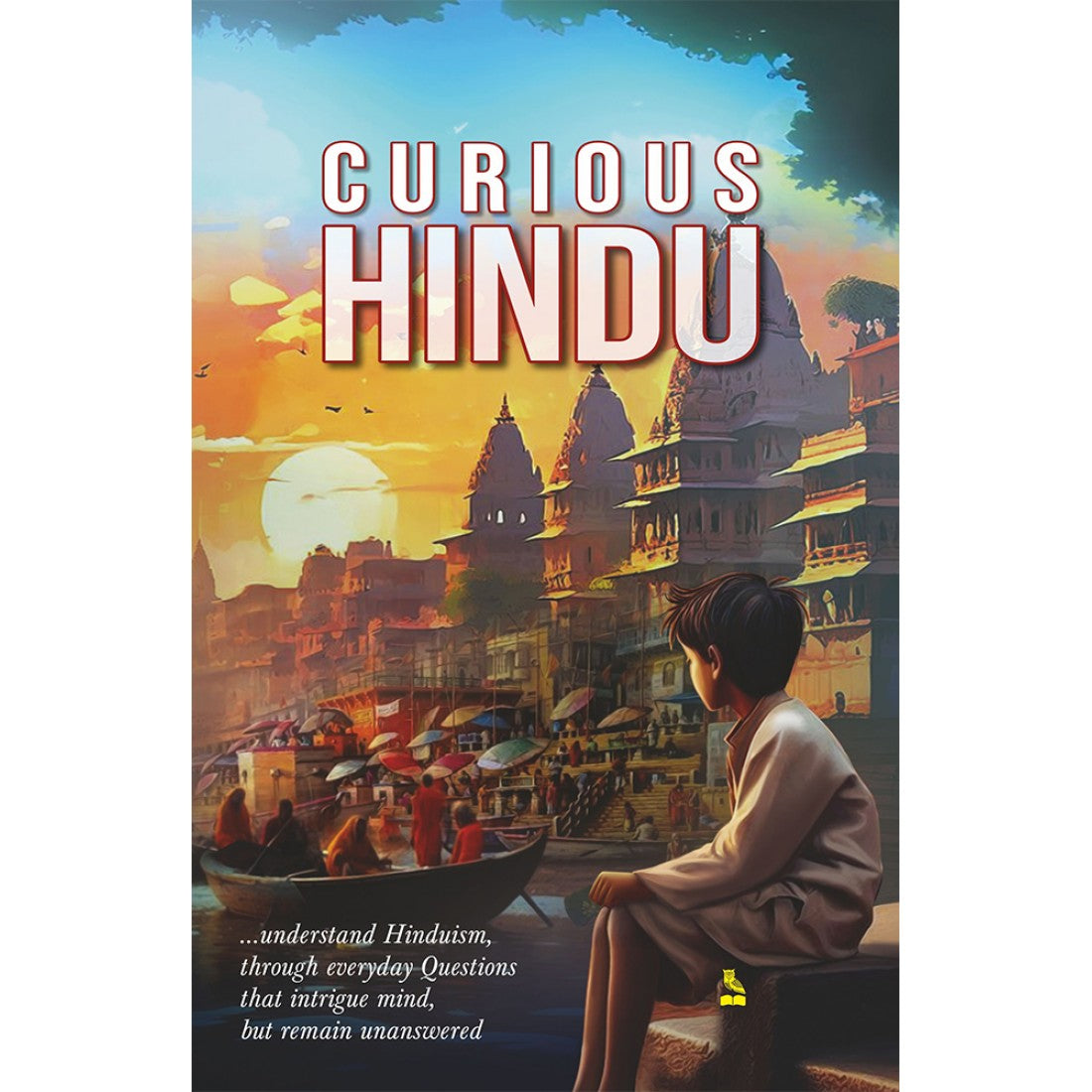
CURIOUS HINDU
CURIOUS HINDU
Couldn't load pickup availability
Hinduism is a way of life. Hinduism is the heart of one of the oldest civilizations, or more importantly has been a foundation to many other civilizations. The philosophy contained is a narrative of what human life and death is, what our purpose in life is, what our responsibilities are, and much more on suffering of mind and physical body. Many scholars consider Hinduism as old as 4000 years, exact time is however difficult to point out as it evolved and developed in some form over several millennia. For many years we continue to be intrigued by the many hues it encompasses. Hinduism is much more beyond just a religion, it represents nature, humanity, suffering, pleasure and every other thing. It essentially paves way to existence of mankind. Therefore, a human needs religion to live – survive. The simplest way to realise this can be, by visualising a human looking up in the sky or at a tree or even a stone to thank or ask the “Supreme”. This supreme is “GOD”. God is river, air, tree, fire, animal, and even a stone. They are all essential for survival. All we need is thank god for the life through these in some form. Man has always found solace in the lap of divine, whether at war or peace, in despair or ecstasy. This succor is achieved by means of worship and praying. Different religions across the world have one common pursuit, that is alleviating human pain. Hinduism thus embodies most elaborate and yet powerful knowledge (often performed and spread through rites and rituals) to achieve salvation. And if not completely to the extent of salvation, definitely towards a more disciplined and a contented life. Hinduism is also not contained in one book, but in many scriptures written and conceived over centuries. For example, Vedas, passed on through oral narration form the foundation of Hinduism in several aspects. These are complex texts written in Sanskrit the then known language. They deal and explain the intricacies of cosmology, deities, ritual, ceremony, and philosophy. Vedas are followed by Upanishads which essentially deal with the relationship of self with reality or Brahman. The relation of Atma with Brahman, Karma and Moksha. Upanishads have had a profound influence on Bhagwat Gita – narrated by Lord Krishna deals with curiosity of the warrior “Arjun” who was disillusioned and sought answer from Divine before killing his own cousins. Here the Lord explains why the war, purpose of Arjun’s life, and his responsibility. Lord settles his curiosity with reason. Gita has been translated in many languages beyond Sanskrit, and continues to drive the naive, who continuously falters in his purpose and responsibility.
Share